Tuesday, January 25, 2011

Character Sketch Essay: Along For the Ride

January 11, 2011
Along for the Ride
Auden, an extremely smart and independent, yet socially challenged teenager, inherited her mother’s critical and judgmental personality.  Because of her lost childhood she grew up with a very mature nature; however, when Auden visits her dad for the summer she learns not only can she be sociable but even a little flirtatious as she makes friends and relives something she should have had years ago.  Making up for lost time and reliving a past she never had, Auden learns that she can be more than an exact replica of her shallow, self-centered, judgmental, incredibly intelligent mother.  Sarah Dessen illustrates the thrills of a lost childhood, the myth behind people changing, and one girl’s life-changing journey in arguably her best novel yet, ‘Along for the Ride’.
Auden West not only acts like her mother, but shares her mother’s looks too.  Her long dark curls, liberated attitude, and a deep critical overlook on life were all traits of her mother.  Auden kept to herself and didn’t make many friends because she could not relate to them.  “Because of this upbringing, I had kind of a hard time relating to other kids my age” (8). Despite these positive and negative elements Auden is a completely different person by the end of the summer.
Many events happen that change Auden, one of which being when her brother’s girlfriend comes into town.  She brings back with her a gift, which is a picture frame with Hollis, Auden’s brother, in front of the Taj Ma Hal that says on the bottom, “Best of Times.”  A harsh and terribly true reality dawns on Auden; she would have absolutely no pictures that could fit this frame, “They (referring to Hollis and her friends) probably had a million pictures that could fit in this frame, but I didn’t have a single one” (16).  She begins to realize that she has wasted her life on academics and trying to please her parents when she should have been a normal teenager.  This realization leads to a decision that triggers more life-changing events for Auden; she decides to stay at her dad and step-mom’s house.  “And just like that, my summer changed” (16).
During Auden’s first night at her step-father’s summer home she finds herself at a local hangout called ‘The Tip’.  She gets together with a boy named Jake, resulting in some trouble from Jake’s ex Maggie.  Maggie and Auden end up working together, “Maybe in the world of girls, this was supposed to be a turning point.  When we saw beyond our initial differences, realized we had something in common after all, and became true friends” (45).  Over the course of Auden West’s summer she learns that there is more to people than meets the eye.  Maggie came off to her as a stuck up girl who only cared about clothes and boys until she learned that Maggie is actually going to one of the most prestigious colleges in the country, with Auden.  Through Maggie, Auden also meets Eli, a boy dedicated to giving Auden the past she never had and even teaches her how to ride a bike.  Eli even jokes with her about how good she is getting at riding, “And here I thought you couldn’t ride a bike” (374)
What changed Auden West the most was the time she spent with her father.  She had always seen her father as the type of man who ran away from anything.  When things got to complicated he bailed out.  With his newborn baby of course things were chaotic and he tried to leave it all which broke Auden’s heart because her dad did the same thing to her.  Auden’s step mom Heidi makes this point very clear, “You have done this before Robert.  Twice.  You knew what it was like to have an infant in the house” (262).  Eventually Auden’s father did come back though and did not abandon his family again, “Sometimes, you get things right the first time.  Others, the second.  But the third time, they say, is the charm.  Standing there, a quitter myself, I figured I would never know if I did not get back on the bike, one last time” (369). 
By the end of Auden’s summer she discovers who she truly is.  She is not trying to be her mother, her brother, or taking bad habits from her father, but she is just herself and she learns that people love her for it, “Because it was obvious, this true difference in me now:  I had these experiences, these talks, more of this life” (361).  Because of her father’s rough summer with a newborn in the house Auden learns people can always change for the better and she should never expect the worst out of someone, “But I wanted to keep believing people could change, and it was certainly easier to do so when you were in the midst of it” (182).  Thanks to Eli, Maggie, and countless other friends Auden made along the summer she learns that she can still have a memorable childhood she always wanted, “…but mostly we disc5ussed making up for lost time, if such thing was possible” (89).  Auden West’s transformation is teaching us that people can change, second chances are real, it is never too late to find yourself, you can always make up for lost time, and if you fall off the bike get back on one last time because you are just along for the ride. 

Sunday, November 21, 2010

Book of the Month

The Noticer by Andy Andrews is by far the best book of the month.  Have you ever contemplated the secret to success, healthy marriage, and a good long life filled with people you love?  Well what if there was a secret to anything you ever wanted?  Well there is, and Andy Andrews fills you in on the secrets to life.  An old man Jones, he refuses to be called anything but that, takes a poor homeless man and tells him how to succeed.  Within a few years the poor homeless man turns into a wealthy happily married business man.  Jones transforms a relationship heading for divorce into a healthy one.  The secrets you come across in this book can be applied to your daily life and help you become happier.  This book should be recommended for mature ages because younger audiences could lose interest.  The secret to life is right at your fingertips.
http://workfromhomesuccesszone.com/self-improvement/the-noticer-by-andy-andrews-book-review/

Colors of Death

Sarah 
Mrs. Zurkowski/Greens
October 27, 2010
Colors of Death
In “The Masque of the Red Death” the color white is used to symbolize a stage of life.  White is the fifth room to the west in Poe’s story. The rooms in this story represent the stages of life going from east to west, just like the sun is born in the east and dies in the west.  They are separated by sharp turns so you cannot see more than one room at once, just like you cannot see your future.   White represents the ages 50-70.  Which are the ages leading up to death.  These ages almost are anticipating death’s arrival because it is coming, but they are not ages full of pain because there is still a little bit of youth left. 
White symbolizes these ages because it is plain, the fun and adventurous time of one’s life is over.  White could also mean aging in the sense that life is being drained out, just as color is drained out of white.  White also symbolizes the knowledge and wisdom gained throughout the years.  As people get older their hair starts to turn white which is another way white can be related to old age.  White is a perfect color to represent old age.  Midnight ecause midnight represents death the color white would be closer to midnight on the ‘ebony clock’.  White is in between the colors orange, the partying ages consisting of mid-life crisis, and violet, the ages next to death that consist of pain and suffering.  These ages fit around white; because, orange is to happy and carefree to fit the personality of a sixty year old, but violet is too painful and full of suffering to be within the ages of 50-70. 
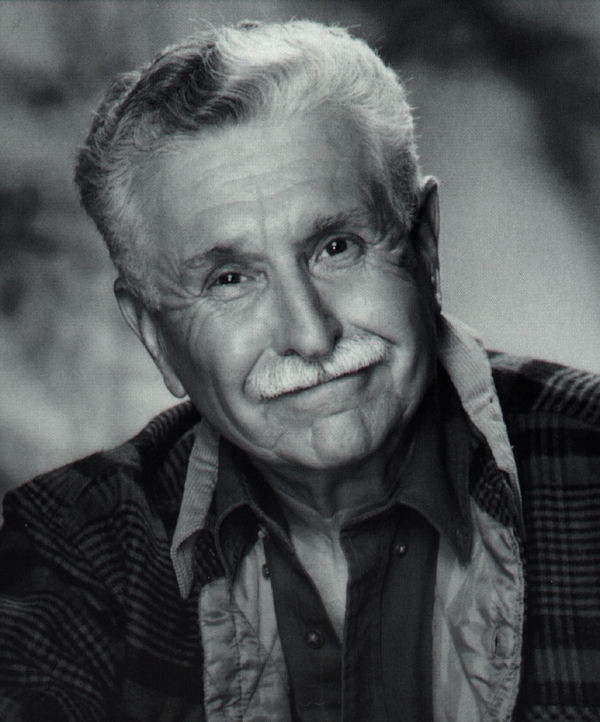
White relates to my life because I know many elderly people and people in their late fifties who are in the white stage of life.  They have done so much in their life and now there is not much they can do anymore, life is drained out of them.  They already had their fun partying days and went through their mid-life crisis.  All of their vast experiences in life have left them with a certain knowledge and wisdom that people in every other stage lack.  This wisdom makes some people excited for the white stage, but what those people do not realize is how much they are going to miss the days when they had nothing but fun.  I am in no rush to grow up, but the wisdom that comes with old age will be nice.  I am sure I will look back and wish that I knew everything then that I know now.  Older people are great to go to for advice because they have been through so many life experiences and can give you great advice, plus I am sure they would love to relive memories through you.  When you are older you wish you were young and when you are young you wish you were older.  I’m in no rush to grow up.  
http://edaa.in/Members/edea/our-old-age-people/

Tuesday, November 9, 2010

O Henry

Sarah P
Mrs. Zurkowski/Greens
11/8/2010
·         Real name was William Sydney Porter.
·         Was born on September 11, 1862 and died on June 5, 1910.
·         His stories were known for their wit, wordplay, warm characterization and endings with a twist.
·         He wrote the most around 1902 when he moved to New York, he wrote 381 stories while there, a story a week.
·         He was a heavy drinker which greatly affected his health and caused him to have an earlier death.
·         He was greatly known for surprise endings.
·         People refer to surprising endings as an “O. Henry ending”
·         Some of his most famous stories are: “The Gift of the Magi”, “The Ransom of Red Chief”, “The Cop and the Anthem”, and “A Retrieved Reformation”.
http://en.wikipedia.org/wiki/O._Henry

Friday, November 5, 2010

Poe's Web Search

Sarah
Mrs. Zurkoswki/Greens
November 5, 2010


 Poe was born on January 19, 1809 in Boston, and he died on October 7, 1849.
Poe’s influence was the many deaths in his family.
Poe’s death was possibly caused by: suicide, murder, cholera, rabies, or the flu.
The state of Virginia was Poe’s home.
Even though Poe was born in Boston, Baltimore truly defines the beginning and end of his life.
West Point Military Academy expelled Poe.
Poe married Virginia Clemm before she was even 14!
Virginia was too young to marry someone who was 27 years old.
“Murders in Rue Morgue” was the first detective story.
The “Tell Tale Heart” and “Black Cat” was written in January 1845.
The Edgar Allan Poe Society of Baltimore WebsiteThe Knowing Poe Website
I've read many of Poe's poems, but few of his stories.  I love is poetry.  M<y favorite poem by him is Annabelle Lee.

Tuesday, November 2, 2010

Second Quarter!!!!!

     I finally reached the second quarter!  This unit is working on short stories!  I love Edgar Allen Poe and Shakespeare so I'm really looking forward to this semester.  Last quarter went well and I'm hoping to make this one even better.  I'm striving for good grades!  Here is a picture of my friends and me as highschool students!  

Tuesday, October 5, 2010

Teen Drinking

Sarah Margaret Pattisall
Mrs. Zurkowski/Green
3 October 2010
Teen Drinking
Most teenagers have tried alcohol due to curiosity and peer pressure.  When you are intoxicated at an age where your brain is still maturing the outcome is never good.  Alcohol causes many deaths in adolescence such as lethal car accidents.  Alcohol is fatal for youth and not many people are aware of how terrible the aftermath can be.  Many severe alcohol-related health issues and accidents occur on a daily basis especially issues involving teens; consequently, teenagers should not be permitted to drink alcohol before the age of 21.
Teenage drinking and driving is the most recognized social problem. (“Teen Social Issues”)  Many of those accidents occur on a regular basis due to liquor.  According to 29% of high school students they were in a car where the driver was intoxicated and 10.5% of those students had been behind the wheel while drunk. (Hellmich)  Alcohol is also the leading cause of young adult and teenage death such as: car accidents, suicide, abuse, and violence.  Teens drink alcohol due to peer pressure, what they hear or see in the media, and their parent’s attitude towards drinking.  (“Teen Social Issues”)  If their parent’s strongly disagree with drinking at any age the risk of their children becoming addicted is minor.  Other reasons teenagers drink is because of rebellion, recreation, fatigue, boredom, and to relieve depression.  Occasionally parents will even let their children drink arguing, “If we do this at home, my child will be able to handle it better.”  (Harpaz) 
Alcohol harmfully affects your health.  Drinking at a young age disturbs the brain, liver, and your body's capability to fight infections. (Hellmich)  Binge drinking is also bad for your health and can result in a serious addiction that can be fatal.  The increase for addiction later in life is raised when people start drinking at a young age.  When you are young a lot of maturing is still going on in your brain.  According to Janet Williams, professor of pediatrics at the University of Texas Health Science Center, "Alcohol use is extremely dangerous for youth because a remarkable amount of brain development is still occurring at this age. The parts of the maturing brain that are most impacted by drinking are essential for developing organization skills, emotional regulation, abstract thinking and impulse control."  When you are older and your brain is done growing alcohol will not affect it like it would have if you were fifteen.
When the community and parental guardians become involved teen drinking can be prevented.  To help prevent teen drinking you can make the community aware of the severity of this social problem by educating the teens about the bad outcome of drinking. (“Teen Social Issues”)  Rehabilitation centers help addicted teens.  They provide a treatment plan consisting of: education, group therapy, life story, individual therapy, peer assessment, recreational therapy, coping skills, relaxation therapy, support group attendance, and spirituality.  Parental emotions towards alcohol can also change a teenagers view on alcohol, "Kids say the biggest reason they don't use alcohol or drugs is that their parents would be disappointed with them if they did.  Drinking in response to every emotion, positive or negative, sets a bad example.  Parents need to think of ways to celebrate or problem-solve that don't involve alcohol and that will help their children do the same." (Hellmich)  This social issue can be prevented by simple actions from the public and parental guardians. 
Letting a teenager have a glass of Champagne at home on holidays is okay. (Harpaz)  Parents believe that if alcohol is consumed in the comfort of home it is completely fine.  Drinking on holidays sends the message that underage drinking is okay.  John Lieberman believes, "At an older age, when someone does decide to drink, their brain is in a different place than when they were fifteen or sixteen.  A fifteen-year-old doesn't have the same grasp of potential consequences."  If alcohol isn't introduced until later in life then there is a smaller chance of addiction.  Going back to what Lieberman said, when you are at or above the legal age to drink you are much more mature and aware of the consequences alcohol brings than you were at a younger age.  You don’t hear near as many things about a thirty-year-old DWI; compared to, a teenager DWI.  Parent’s need to understand they set an example for their children no matter what they do, good and bad. 
Most teens think it’s cool to drink and drive. (“Teen Social Issues”)  Alcohol is easy to get according to more than 90% of high school seniors and 60% of eighth-graders.  (Hellmich)  Could you imagine an eighth grader having access to alcohol?  Do those teens know that alcohol increases the risk of other illegal behaviors that can lead to injury or death?  Why risk your own life and someone else’s when you know it could lead to death?  Is it cool to drink and drive; is it cool to kill someone or yourself?  It’s not cool at all. 
As you can see the social issue of teen drinking is negatively affecting our society; however, if the legal drinking age is more strictly enforced and the community takes action this problem can be resolved.  If it is shown to teenagers and younger members of the community the harmful effects of alcohol then the issue of alcohol in adolescence could diminish.  The media also should show a better view on the effects of alcohol instead of just showing a bunch of teenagers partying.  Simple actions such as making people more aware of this social issue could change it for the better.  These kids are the face of the future, what future do you see?
Work Cited
Harpaz, Beth J. "Is It Ok to Give Teens a Taste of Champagne at Home New Year's    Eve?." Daily    Gleaner Fredericton, N.B., Canada. 30 Dec 2009: C.2. SIRS             Researcher. Web. 27 Sep        2010.    
Hellmich, Nanci. "Pediatric policy: Discourage teenage drinking." USA  Today 12 Apr. 2010: 04D. Gale Student Resources In Context. Web.  16 Sept. 2010.
 "Teen Social Issues." Parenting, Parenting Problems, Types of Parenting, Parenting   Children. Web.  28 Sept. 2010.